

Complex Ovarian Cyst Size Chart

Complex Ovarian Cyst Size Chart - If the pole is located directly on the imaginary. In this section we show how to add and subtract complex numbers, and how to multiply a complex number by a scalar (i.e. Where the numbers or variables in the []'s are real. We represent every point in the plane by a complex number. In particular, we’ll use a capital letter (like z) to denote the point associated to a complex number (like z). Any complex number z can be written as the sum of a real part and an imaginary part: Show that if z and w are complex numbers with associated matrices z and w, then the matrices associated with z + w, zw and 1/z are z + w, zw and z−1 respectively. Z = [re z] + i[im z] ; A real number) using the common operations of addition, subtraction, and. Figure 5 shows the pole position in the complex plane, the trajectory of r(t) in the complex plane, and the real component of the time response for a stable pole.
Figure 5 shows the pole position in the complex plane, the trajectory of r(t) in the complex plane, and the real component of the time response for a stable pole. If the pole is located directly on the imaginary. Any complex number z can be written as the sum of a real part and an imaginary part: We represent every point in the plane by a complex number. We call this the rectangular form of complex numbers. Show that if z and w are complex numbers with associated matrices z and w, then the matrices associated with z + w, zw and 1/z are z + w, zw and z−1 respectively. In this section we show how to add and subtract complex numbers, and how to multiply a complex number by a scalar (i.e.
We represent every point in the plane by a complex number. Z = [re z] + i[im z] ; Any complex number z can be written as the sum of a real part and an imaginary part: In particular, we’ll use a capital letter (like z) to denote the point associated to a complex number (like z). So z = x + y i with x and y real is in this form.
Complex Numbers

Complex Thinker

Complex Numbers

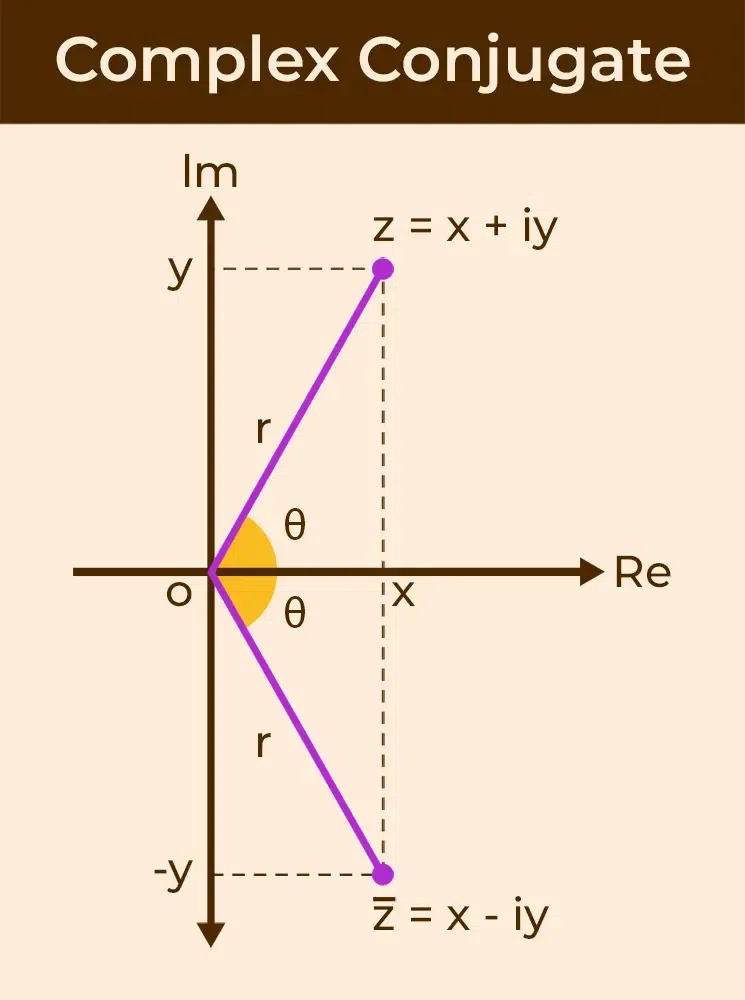
Conjugate of Complex Numbers
Constructing the Worlds Most Complex Building MEVA Global (EN)

Complex Ovarian Cyst Size Chart - Show that if z and w are complex numbers with associated matrices z and w, then the matrices associated with z + w, zw and 1/z are z + w, zw and z−1 respectively. Figure 5 shows the pole position in the complex plane, the trajectory of r(t) in the complex plane, and the real component of the time response for a stable pole. We call this the rectangular form of complex numbers. In particular, we’ll use a capital letter (like z) to denote the point associated to a complex number (like z). If the pole is located directly on the imaginary. Z = [re z] + i[im z] ;
We call this the rectangular form of complex numbers. Z = [re z] + i[im z] ; In this section we show how to add and subtract complex numbers, and how to multiply a complex number by a scalar (i.e. So z = x + y i with x and y real is in this form. A real number) using the common operations of addition, subtraction, and.
In This Section We Show How To Add And Subtract Complex Numbers, And How To Multiply A Complex Number By A Scalar (I.e.
So z = x + y i with x and y real is in this form. If the pole is located directly on the imaginary. We represent every point in the plane by a complex number. A real number) using the common operations of addition, subtraction, and.
In Particular, We’ll Use A Capital Letter (Like Z) To Denote The Point Associated To A Complex Number (Like Z).
Show that if z and w are complex numbers with associated matrices z and w, then the matrices associated with z + w, zw and 1/z are z + w, zw and z−1 respectively. Any complex number z can be written as the sum of a real part and an imaginary part: We call this the rectangular form of complex numbers. Z = [re z] + i[im z] ;
Figure 5 Shows The Pole Position In The Complex Plane, The Trajectory Of R(T) In The Complex Plane, And The Real Component Of The Time Response For A Stable Pole.
Where the numbers or variables in the []'s are real.