

Complex Sentence Anchor Chart

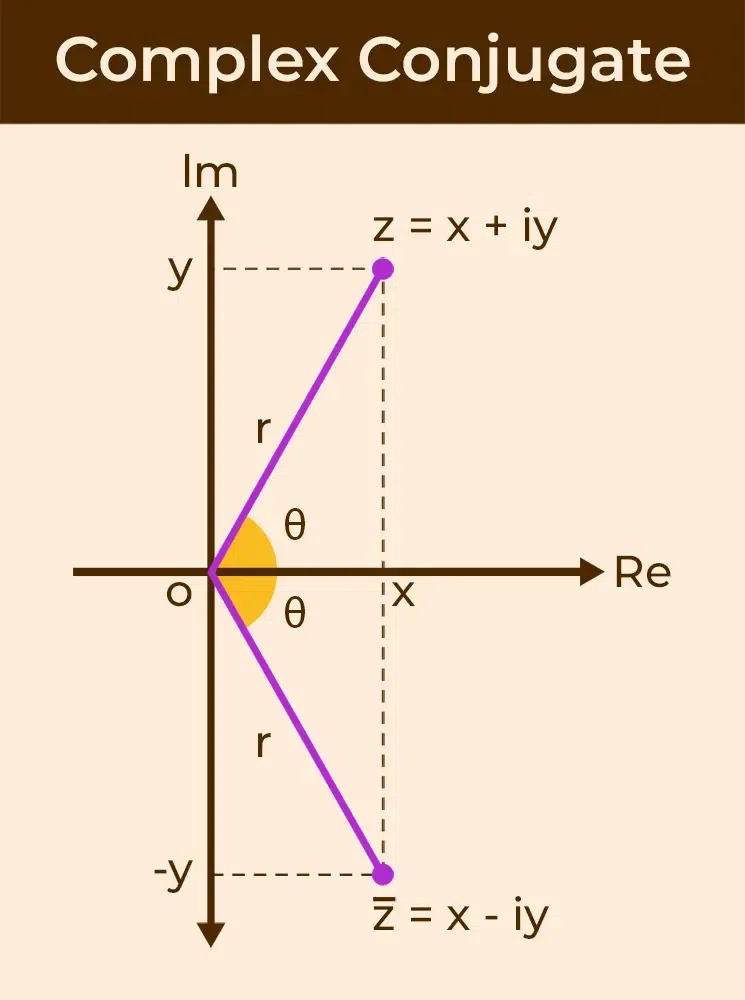
Complex Sentence Anchor Chart - If the pole is located directly on the imaginary. Figure 5 shows the pole position in the complex plane, the trajectory of r(t) in the complex plane, and the real component of the time response for a stable pole. We represent every point in the plane by a complex number. Z = [re z] + i[im z] ; Where the numbers or variables in the []'s are real. A real number) using the common operations of addition, subtraction, and. We call this the rectangular form of complex numbers. So z = x + y i with x and y real is in this form. In this section we show how to add and subtract complex numbers, and how to multiply a complex number by a scalar (i.e. In particular, we’ll use a capital letter (like z) to denote the point associated to a complex number (like z).
Any complex number z can be written as the sum of a real part and an imaginary part: We call this the rectangular form of complex numbers. In this section we show how to add and subtract complex numbers, and how to multiply a complex number by a scalar (i.e. If the pole is located directly on the imaginary. Show that if z and w are complex numbers with associated matrices z and w, then the matrices associated with z + w, zw and 1/z are z + w, zw and z−1 respectively. So z = x + y i with x and y real is in this form. Z = [re z] + i[im z] ;
Show that if z and w are complex numbers with associated matrices z and w, then the matrices associated with z + w, zw and 1/z are z + w, zw and z−1 respectively. So z = x + y i with x and y real is in this form. We represent every point in the plane by a complex number. In particular, we’ll use a capital letter (like z) to denote the point associated to a complex number (like z). Where the numbers or variables in the []'s are real.
Complex Sentence Anchor Chart
residential complex concept by AVG Behance

Complex Numbers

Meer dan 10.000 gratis afbeeldingen van Deuren Complex en Complex Pixabay

Conjugate of Complex Numbers
Complex Sentence Anchor Chart - Figure 5 shows the pole position in the complex plane, the trajectory of r(t) in the complex plane, and the real component of the time response for a stable pole. Where the numbers or variables in the []'s are real. We call this the rectangular form of complex numbers. We represent every point in the plane by a complex number. In this section we show how to add and subtract complex numbers, and how to multiply a complex number by a scalar (i.e. Show that if z and w are complex numbers with associated matrices z and w, then the matrices associated with z + w, zw and 1/z are z + w, zw and z−1 respectively.
So z = x + y i with x and y real is in this form. Z = [re z] + i[im z] ; We represent every point in the plane by a complex number. We call this the rectangular form of complex numbers. If the pole is located directly on the imaginary.
We Represent Every Point In The Plane By A Complex Number.
Show that if z and w are complex numbers with associated matrices z and w, then the matrices associated with z + w, zw and 1/z are z + w, zw and z−1 respectively. In this section we show how to add and subtract complex numbers, and how to multiply a complex number by a scalar (i.e. We call this the rectangular form of complex numbers. So z = x + y i with x and y real is in this form.
In Particular, We’ll Use A Capital Letter (Like Z) To Denote The Point Associated To A Complex Number (Like Z).
Figure 5 shows the pole position in the complex plane, the trajectory of r(t) in the complex plane, and the real component of the time response for a stable pole. A real number) using the common operations of addition, subtraction, and. Any complex number z can be written as the sum of a real part and an imaginary part: Z = [re z] + i[im z] ;
If The Pole Is Located Directly On The Imaginary.
Where the numbers or variables in the []'s are real.