

Decibel Chart Sound
Decibel Chart Sound - Find out in this article with a chart included. To express levels of sound meaningfully in numbers that are more manageable, a logarithmic scale is used, rather than a linear one. The decibel is useful for representing large ratios and for simplifying representation of multiplicative effects, such as attenuation from multiple sources along a signal chain. That’s the sound of a. Decibel (db), unit for expressing the ratio between two physical quantities, usually amounts of acoustic or electric power, or for measuring the relative loudness of sounds. If it sounds too loud, it is too loud decibels are the unit of measurement for sound, abbreviated db. Sounds at or below 70 db are considered safe for our hearing. What are decibel levels, and why are they so important? How can you measure them, and when are they too loud? Decibels serve as the universal yardstick for measuring sound intensity, capturing the vast range of audible sounds that the human ear can detect.
Sounds at or below 70 db are considered safe for our hearing. If it sounds too loud, it is too loud decibels are the unit of measurement for sound, abbreviated db. That’s the sound of a. How can you measure them, and when are they too loud? This scale is the decibel scale. Noise comparisonsnoise sources and their effects Find out in this article with a chart included.
To express levels of sound meaningfully in numbers that are more manageable, a logarithmic scale is used, rather than a linear one. This scale is the decibel scale. Decibel (db), unit for expressing the ratio between two physical quantities, usually amounts of acoustic or electric power, or for measuring the relative loudness of sounds. If it sounds too loud, it is too loud decibels are the unit of measurement for sound, abbreviated db. How can you measure them, and when are they too loud?
Decibel Scale Hugo Carter

The Decibel Scale Ikoustic Soundproofing
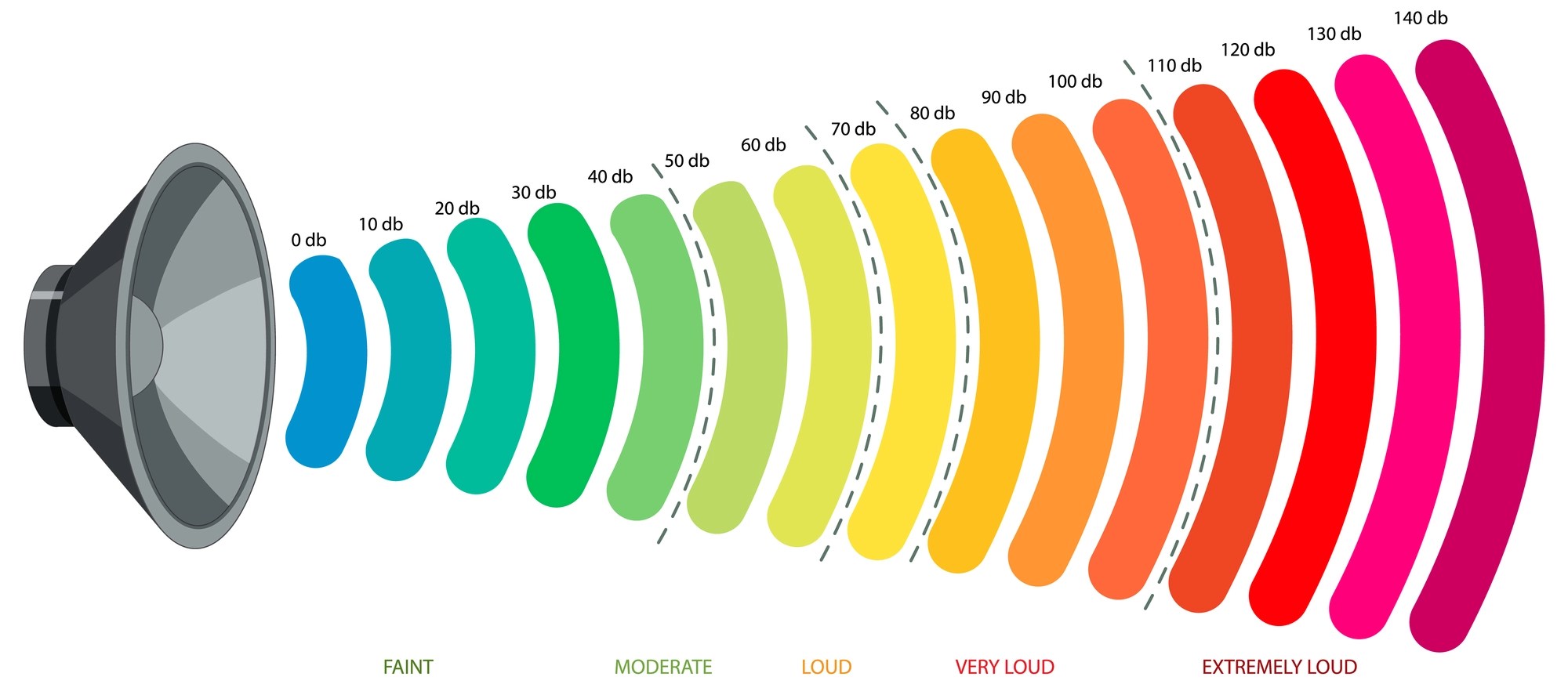
Decibel Meter Scale


Decibel levels chart rytemuseum

Decibel scale sound seryscience


Decibel Chart Sound - To express levels of sound meaningfully in numbers that are more manageable, a logarithmic scale is used, rather than a linear one. Decibels serve as the universal yardstick for measuring sound intensity, capturing the vast range of audible sounds that the human ear can detect. If it sounds too loud, it is too loud decibels are the unit of measurement for sound, abbreviated db. How can you measure them, and when are they too loud? That’s the sound of a. Decibel (db), unit for expressing the ratio between two physical quantities, usually amounts of acoustic or electric power, or for measuring the relative loudness of sounds.
Find out in this article with a chart included. How can you measure them, and when are they too loud? That’s the sound of a. This scale is the decibel scale. To express levels of sound meaningfully in numbers that are more manageable, a logarithmic scale is used, rather than a linear one.
Decibels serve as the universal yardstick for measuring sound intensity, capturing the vast range of audible sounds that the human ear can detect. Sounds at or below 70 db are considered safe for our hearing. This scale is the decibel scale. That’s the sound of a.
Noise Comparisonsnoise Sources And Their Effects
To express levels of sound meaningfully in numbers that are more manageable, a logarithmic scale is used, rather than a linear one. If it sounds too loud, it is too loud decibels are the unit of measurement for sound, abbreviated db. That’s the sound of a. How can you measure them, and when are they too loud?
Decibel (Db), Unit For Expressing The Ratio Between Two Physical Quantities, Usually Amounts Of Acoustic Or Electric Power, Or For Measuring The Relative Loudness Of Sounds.
Decibels serve as the universal yardstick for measuring sound intensity, capturing the vast range of audible sounds that the human ear can detect. This scale is the decibel scale. Find out in this article with a chart included. The decibel is useful for representing large ratios and for simplifying representation of multiplicative effects, such as attenuation from multiple sources along a signal chain.
What Are Decibel Levels, And Why Are They So Important?
Sounds at or below 70 db are considered safe for our hearing.