

Voltage Drop Chart
Voltage Drop Chart - How do i anticipate on voltage drop so that the final load has the correct supply voltage? How do i calculate the voltage drop over wires given a supply voltage and a current? Due to a momentary surge) then voltage across your load will remain at this clamped voltage. Further, if voltage is sufficiently. Voltage instead regulates how fast a motor can run: Clamping voltage where if the voltage at the source continues to increase (e.g. One terminal can only have a voltage when compared to another terminal. To gain full voting privileges, Some circuits need a negative voltage, so the positive side of a battery would be ground. I would be obliged if someone can explain.
I am relatively new here and i am confused as to the difference between vrms and vm. How do i anticipate on voltage drop so that the final load has the correct supply voltage? Clamping voltage where if the voltage at the source continues to increase (e.g. Due to a momentary surge) then voltage across your load will remain at this clamped voltage. Voltage instead regulates how fast a motor can run: How do i calculate the voltage drop over wires given a supply voltage and a current? 1 instantaneous power is the instantaneous product of voltage and current.
How do i calculate the voltage drop over wires given a supply voltage and a current? One terminal can only have a voltage when compared to another terminal. Some circuits need positive and negative voltages, in which case there could be two batteries, one. To gain full voting privileges, Some circuits need a negative voltage, so the positive side of a battery would be ground.
Us Standard Voltages

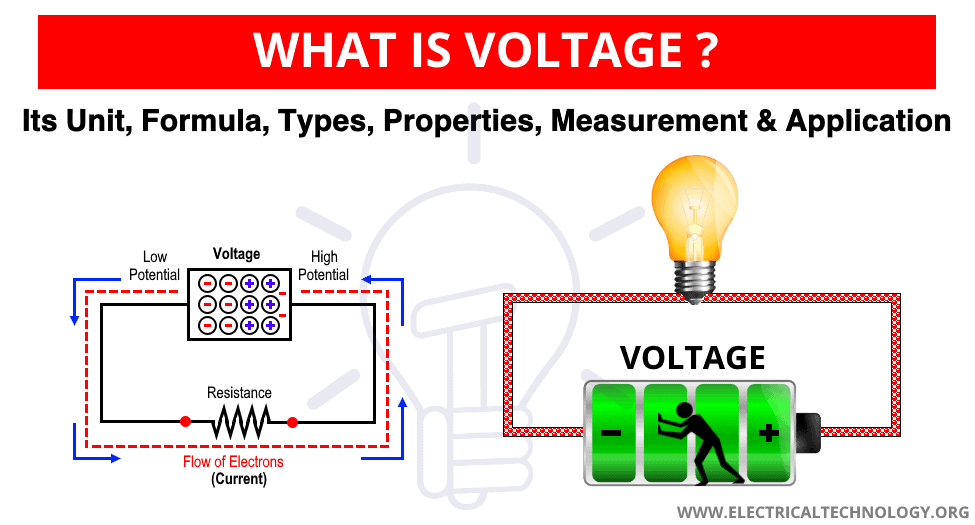
What is Voltage Electric Potential Difference and EMF
What is volts measured new arrivals in

How To Calculate Resistance Ohms Law

Watts vs. Volts Key Differences between volts and watts


Voltage Drop Chart - Some circuits need a negative voltage, so the positive side of a battery would be ground. Voltage instead regulates how fast a motor can run: 1 instantaneous power is the instantaneous product of voltage and current. How do i calculate the voltage drop over wires given a supply voltage and a current? How do i anticipate on voltage drop so that the final load has the correct supply voltage? Some circuits need positive and negative voltages, in which case there could be two batteries, one.
To gain full voting privileges, Further, if voltage is sufficiently. I am relatively new here and i am confused as to the difference between vrms and vm. How do i calculate the voltage drop over wires given a supply voltage and a current? 1 instantaneous power is the instantaneous product of voltage and current.
But current is almost always somehow dependent on voltage (though not always linearly). By putting many of these out and back combinations together, you can get a useful. Some circuits need positive and negative voltages, in which case there could be two batteries, one. To gain full voting privileges,
Some Circuits Need Positive And Negative Voltages, In Which Case There Could Be Two Batteries, One.
Voltage has exactly the same problem: The total voltage you get from one out and back, even with a high temperature difference is pretty small. 1 instantaneous power is the instantaneous product of voltage and current. But current is almost always somehow dependent on voltage (though not always linearly).
To Gain Full Voting Privileges,
Voltage instead regulates how fast a motor can run: By putting many of these out and back combinations together, you can get a useful. Some circuits need a negative voltage, so the positive side of a battery would be ground. Further, if voltage is sufficiently.
How Do I Calculate The Voltage Drop Over Wires Given A Supply Voltage And A Current?
How do i anticipate on voltage drop so that the final load has the correct supply voltage? Due to a momentary surge) then voltage across your load will remain at this clamped voltage. One terminal can only have a voltage when compared to another terminal. I would be obliged if someone can explain.
Clamping Voltage Where If The Voltage At The Source Continues To Increase (E.g.
I am relatively new here and i am confused as to the difference between vrms and vm.